Better breathing, better sleep for Nelson
Snoring and sleep apnoea
Snoring
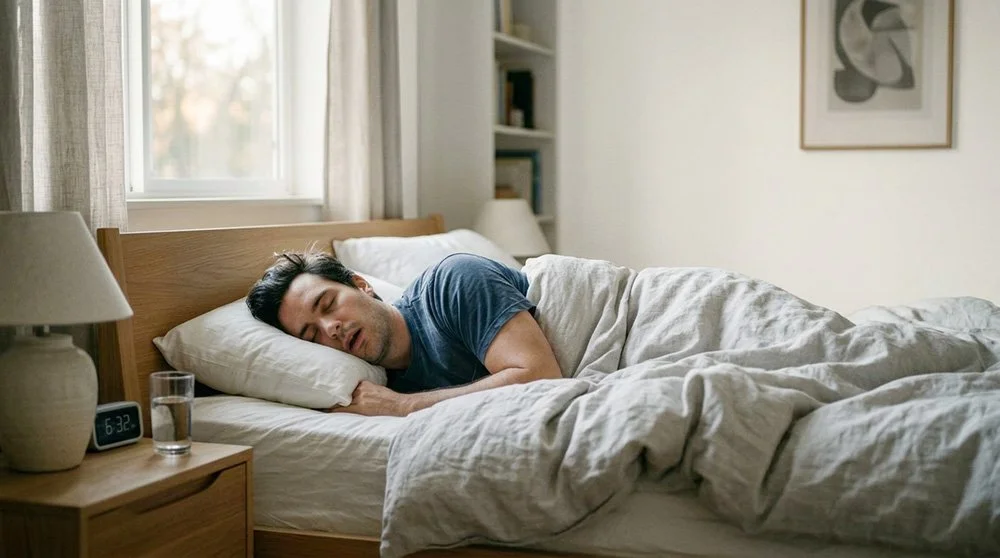
Snoring occurs when the airway is partially obstructed during sleep. A common dental cause is an undershot jaw or a narrow upper jaw, which leaves little space for the tongue. As a result, the tongue sits closer to the back of the throat at night. This partial blockage causes the soft palate and tissues of the throat to vibrate as air passes through, resulting in snoring.
While we are awake, our brain signals the muscles to work harder and keep the airway open. During sleep, this response is reduced, so the airway remains narrow and snoring occurs. Snoring is often worse when sleeping on your back, but it can happen in any position.
Obstructive Sleep Apnoea
Obstructive Sleep Apnoea (OSA) is a more serious condition where the airway becomes completely blocked during sleep. People with OSA typically snore, but as their airway becomes more restricted, breathing may stop altogether for brief periods. Each time this happens, the brain triggers a brief awakening to restore breathing, often leaving individuals feeling tired and unrested even after a full night’s sleep.
OSA can lead to a range of health complications if left untreated. Gerry has dedicated three years to advanced study at Tufts University in Boston, USA, under Dr Noshir Mehta, earning a Master of Science through the Craniofacial Pain Clinic. Sleep apnoea was an important part of his study.
Request an appointment online, or contact us to discuss how we can help treat your snoring and sleep apnoea.